

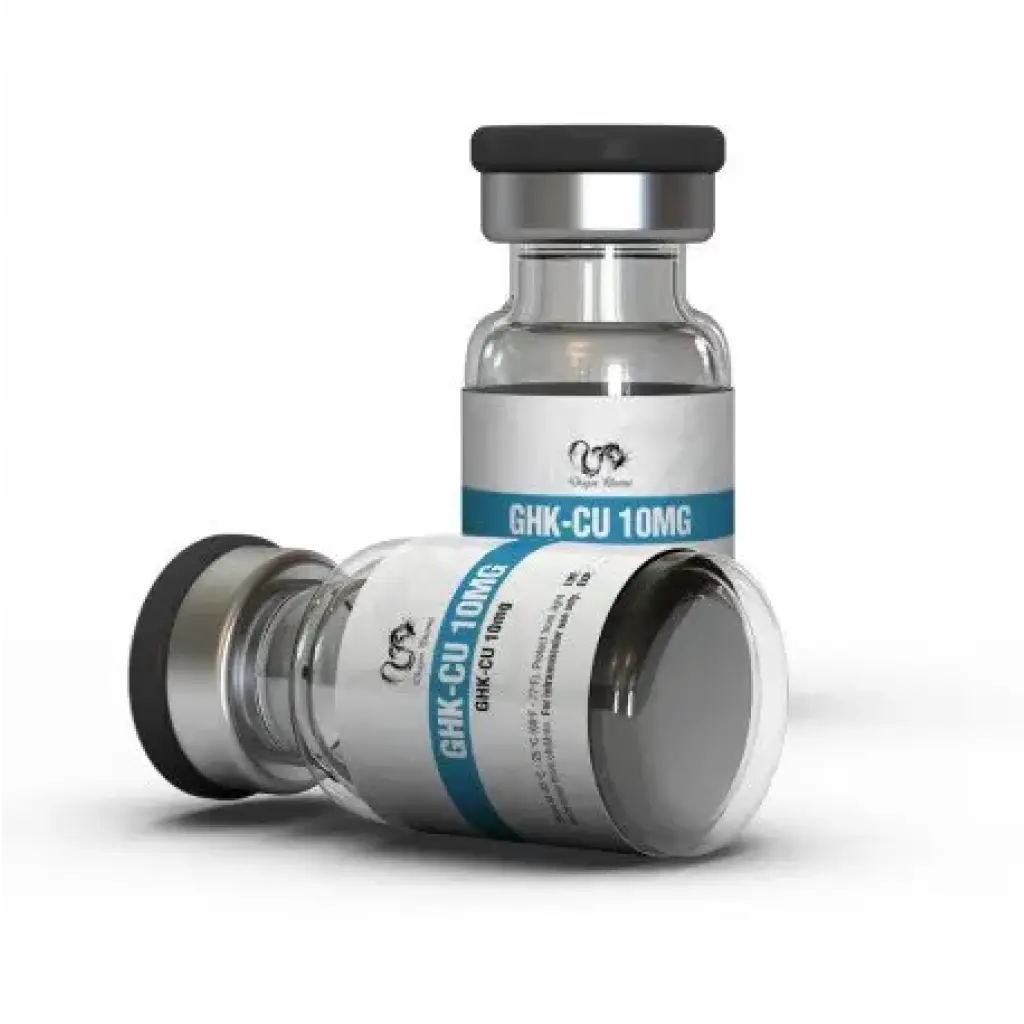
Copper Binding Peptide
Active Substance: GHK-Cu (Glycyl-L-histidyl-L-lysine copper complex)
Manufacturer: Dragon Pharma
Unit: 2 mL Vial (10 mg/vial)
Form: Lyophilized Powder
🇺🇸 USA Domestic: 2–7 Days Delivery
🌏 International: 5–20 Days Delivery
GHK-CU 10 mg by Dragon Pharma is a research copper peptide studied for its potential role in tissue repair, collagen support, skin quality, and recovery-focused protocols. GHK-CU is one of the most recognized regenerative peptides in modern peptide research and is often discussed in connection with wound healing, connective tissue support, and healthy-aging applications.
For athletes, bodybuilders, and physically active users, recovery is not limited to muscle tissue alone. Skin integrity, connective tissue strength, and inflammation control can all influence long-term performance and resilience. For users looking to buy GHK-CU 10 mg by Dragon Pharma, product quality, sterile handling, and consistent sourcing remain essential considerations.
GHK-CU is a copper-binding tripeptide composed of glycine, histidine, and lysine. This peptide forms a stable complex with copper ions, which are involved in numerous biological processes related to repair, remodeling, and antioxidant defense.
It is naturally present in the human body, although levels are known to decline with age. Because of this, GHK-CU has become a major focus in research involving skin regeneration, tissue healing, and age-related repair capacity.
In athletic and physique-focused settings, GHK-CU is commonly researched for its broad regenerative profile. It is often discussed in protocols designed to support connective tissue, post-training recovery, and visible skin quality.
For a broader look at the peptide's regenerative research profile, you can refer to this PubMed review on GHK-CU and tissue repair.
GHK-CU has been studied in connection with tissue remodeling, collagen production, anti-inflammatory signaling, and wound-healing support. Research interest also extends into skin rejuvenation, hair-growth related studies, and broader gene-expression pathways associated with repair and recovery.
This wide range of research applications explains why GHK-CU remains one of the better-known peptides in both cosmetic and athletic recovery discussions. For bodybuilders and fitness users, the peptide is often explored for its potential to support the tissues that absorb repeated physical stress over time.
Note: GHK-CU is intended for research purposes only. The following reflects common protocol patterns and provided context rather than medical advice.
GHK-CU may be researched through subcutaneous or topical protocols depending on the intended application. Common research-oriented examples include:
The 10 mg vial is commonly reconstituted with 2 mL of bacteriostatic water, producing a concentration of 5 mg/mL. At that concentration, a 2 mg dose equals 0.4 mL, or 40 units on a U-100 insulin syringe, while a 5 mg dose equals 1.0 mL.
Female research protocols often use similar or slightly lower ranges depending on the intended goal. In skin-focused and topical applications, lower-dose or localized approaches are common. For general regenerative protocols, many users start conservatively and adjust only if needed.
GHK-CU has a relatively short circulating half-life, but its research interest comes from downstream effects related to tissue remodeling, repair signaling, and cumulative use over time. This is why daily or repeated protocol use is commonly discussed in peptide communities.
GHK-CU is generally discussed as well tolerated in research settings. When side effects are mentioned, they are usually mild and may include temporary injection-site irritation, brief skin flushing, a metallic taste, or topical irritation when used in stronger localized formulations.
Because the peptide is copper-binding, users often pay attention to total protocol design and consistency rather than unnecessarily aggressive dosing.
GHK-CU should not be used by pregnant or nursing women. Individuals with copper metabolism disorders or serious chronic conditions should use caution when considering copper-based peptide protocols. Proper sterile technique and storage practices should always be followed. Keep out of reach of children.
Excessive use is unlikely to improve results and may increase the chance of irritation or unwanted copper-related effects. If accidental excessive use occurs, discontinue the protocol and seek medical advice.
GHK-CU is often researched alongside other peptides connected to tissue repair, regeneration, and healthy-aging protocols. Common combinations include:
These combinations are typically explored by users interested in connective tissue support, skin quality, recovery capacity, and long-term regenerative maintenance.
Dragon Pharma presents GHK-CU in a sterile 2 mL vial containing 10 mg of lyophilized powder. The freeze-dried format helps preserve stability before reconstitution and supports accurate dose preparation.
Store the lyophilized vial in a cool, dry place away from direct light and moisture, ideally at 2-8°C. After reconstitution with bacteriostatic water, keep refrigerated and use within 2-3 weeks for best stability. Do not freeze.
This product is intended for laboratory research and analytical purposes only. Not for human consumption. Always verify the legality of this compound in your jurisdiction before purchase.
GHK-CU is a research copper peptide studied for tissue repair, collagen support, skin quality, recovery, and regenerative applications. It is commonly explored in protocols involving connective tissue, wound-healing support, and healthy-aging research.
GHK-CU binds copper and is studied for its potential influence on repair signaling, collagen-related activity, antioxidant balance, and gene-expression pathways connected to regeneration. This broad research profile is one reason it remains popular in tissue-support discussions.
Yes, GHK-CU has gained interest among athletes, bodybuilders, and fitness-focused users because it is often researched for connective tissue support, recovery, skin quality, and long-term maintenance of tissues exposed to repeated physical stress.
To reconstitute the 10 mg vial, researchers commonly add 2 mL of bacteriostatic water and gently swirl until fully dissolved. This yields a concentration of 5 mg/mL for measured dosing during recovery or regenerative protocols.
To help verify authenticity, buy only from trusted sources that maintain proper storage conditions and provide clear product labeling. Dragon Pharma peptides should arrive in properly labeled sterile vials with batch-related information when available.
Please log in to write GHK-CU 10 mg review.
Mitochondrial-Derived Peptide
Active Substance: MOTS-C
Manufacturer: Dragon Pharma
Unit: 2 mL Vial (10 mg/vial)
Human Peptide Hormone
Active Substances:
- Thymosin Beta 4 5 mg
- Pentadecapeptide 5mg
Manufacturer: Dragon Pharma
Unit: 2 mL Vial (10 mg/vial)
Laboratory Tested: View Lab Result
Melanotropin Peptide
Active Substance: Melanotan 2
Manufacturer: Dragon Pharma
Unit: 2 mL Vial (5 mg/vial)
Laboratory Tested: View Lab Result
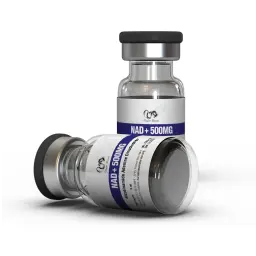
Mitochondrial Energizer/Sirtuin Activator
Active Substance: Nicotinamide Adenine Dinucleotide
Manufacturer: Dragon Pharma
Unit: 2 mL Vial (500 mg/vial)
Form: Lyophilized Powder
USA Domestic: 2-7 Days Delivery
International: 5-20 Days Delivery