

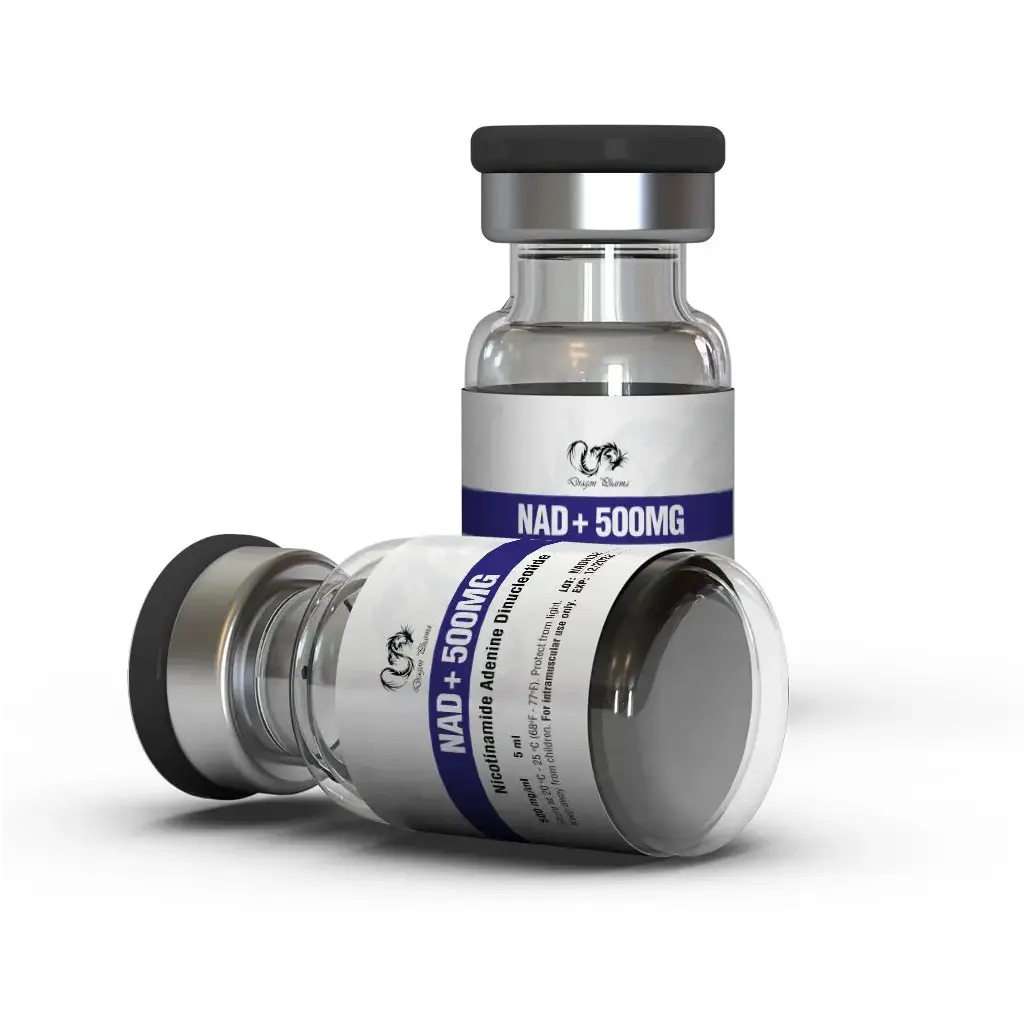
Mitochondrial Energizer/Sirtuin Activator
Active Substance: Nicotinamide Adenine Dinucleotide
Manufacturer: Dragon Pharma
Unit: 2 mL Vial (500 mg/vial)
Form: Lyophilized Powder
USA Domestic: 2-7 Days Delivery
International: 5-20 Days Delivery
Nicotinamide Adenine Dinucleotide (NAD+) sits at the core of cellular energy production and recovery. It is a naturally occurring coenzyme found in every living cell, where it plays a central role in mitochondrial function, DNA repair, and metabolic regulation. In both athletic and longevity research, NAD+ is widely discussed as a foundational molecule that supports the body's ability to adapt to physical stress. When you Buy NAD+ by Dragon Pharma, you are choosing a high-strength, research-grade compound produced to Legit Dragon Pharma quality standards.
Each 2 mL vial contains 500 mg of high-purity Nicotinamide Adenine Dinucleotide (NAD+) in lyophilized powder form. NAD+ is composed of two nucleotides joined by phosphate groupsâone containing adenine and the other nicotinamide. Inside the cell, NAD+ cycles between its oxidized (NAD+) and reduced (NADH) forms, enabling essential redox reactions that drive energy metabolism and cellular maintenance.
NAD+ functions as a primary electron carrier during cellular respiration. In the mitochondria, it accepts electrons generated from glucose and fatty acid metabolism and delivers them to the electron transport chain for ATP production. Beyond energy generation, NAD+ serves as a required substrate for enzymes involved in DNA repair (PARPs), metabolic regulation (sirtuins), and immune signaling (CD38). Through these pathways, NAD+ influences mitochondrial biogenesis, oxidative stress response, and cellular resilienceâkey areas of interest in performance and recovery research.
For bodybuilders and athletes, NAD+ is primarily researched for its role in energy efficiency and recovery capacity. Adequate NAD+ availability supports mitochondrial output, allowing nutrients to be converted into usable energy more efficiently during training. NAD+-dependent sirtuin activation is also linked to improved mitochondrial density and metabolic flexibility. Additionally, NAD+ supports DNA repair processes that help counteract oxidative stress generated by intense exercise. Together, these mechanisms make NAD+ a central focus in research exploring endurance, fatigue resistance, and recovery optimization.
Scientific literature consistently shows that NAD+ levels decline with age, contributing to reduced mitochondrial efficiency and slower recovery. Physical activity has been shown to partially offset this decline. Studies comparing trained athletes with sedentary individuals demonstrate higher NAD+ concentrations in physically active populations, suggesting that exercise stimulates NAD+ metabolism. This relationship has made NAD+ a key target in research examining how metabolic demand, training load, and aging interact at the cellular level.
NAD+ is widely studied across multiple research fields, including:
In research settings, NAD+ dosing protocols vary depending on study design. Commonly referenced ranges include 25â100 mg per administration, delivered subcutaneously 1â3 times per week. Some protocols begin with more frequent dosing before transitioning to maintenance schedules. The 500 mg vial allows flexible dosing across multiple administrations. Research cycles often span 4â8 weeks with a break for evaluation.
Female research protocols typically use similar or slightly lower amounts, often starting at 25â75 mg per dose, 1â3 times weekly. Conservative initiation and gradual adjustment based on tolerance and study goals is standard practice.
Exogenous NAD+ is rapidly utilized or converted within the body, resulting in a short circulating presence. However, downstream effects on mitochondrial function and enzyme activation may persist beyond immediate metabolism. This supports spaced dosing approaches rather than continuous administration.
NAD+ is generally well-tolerated in research use. Mild, transient effects such as flushing, warmth, headache, nausea, or fatigue have been reported, particularly at higher doses. Injection-site irritation may occur with subcutaneous administration. These effects are typically dose-dependent and short-lived.
Due to NAD+'s involvement in cellular growth and repair pathways, caution is advised in research models involving active malignancy. As with all research chemicals, this product is intended for laboratory use only and is not for human consumption. Pregnant or nursing individuals should not handle this compound.
Excessive dosing may intensify common side effects such as flushing or headache. There is no specific antidote; supportive care and monitoring are recommended, with discontinuation if unexpected effects occur.
NAD+ is frequently incorporated into broader metabolic research protocols. It pairs well with AICAR, which activates AMPKâanother key energy-sensing pathway. For mitochondrial-focused studies, combining NAD+ with SS-31 allows investigation of both energy production and mitochondrial membrane integrity. Another complementary option is MOTS-c, a mitochondrial-derived peptide involved in metabolic regulation. Typical research cycles last 4â6 weeks.
Dragon Pharma NAD+ 500 mg is supplied in a sterile, sealed 2 mL clear glass vial containing a white to off-white lyophilized crystalline powder. Each vial is labeled with product name, strength, batch number, and expiration date for traceability and quality assurance.
Store unopened vials in a cool, dry place away from light. Refrigeration (2â8°C / 36â46°F) is recommended for long-term storage. After reconstitution with Bacteriostatic Water, store refrigerated and use within 28 days.
Recent research continues to explore the relationship between NAD+ metabolism, exercise, and mitochondrial function. A study published in Nutrients examined how NAD+ precursor strategies combined with metabolic interventions influenced energy efficiency and exercise performance, offering useful context for NAD+ research frameworks. Read the study on PubMed.
NAD+ is a coenzyme required for ATP production, DNA repair, and mitochondrial function. For athletes, adequate NAD+ levels support energy output, recovery, and metabolic flexibility during training.
Yes. Research shows physically active individuals tend to maintain higher NAD+ levels than sedentary populations, suggesting exercise stimulates NAD+ metabolism as part of the adaptive response to training.
NAD+ is generally well-tolerated. Mild flushing, headache, or nausea may occur, especially at higher doses. These effects are typically temporary.
Inject 1â2 mL of Bacteriostatic Water into the vial using a sterile syringe. Gently swirl until dissolvedâdo not shake. Store refrigerated and use within 28 days.
Yes. NAD+ is often combined with compounds that target mitochondrial health and energy signaling, such as AICAR, SS-31, or MOTS-c, depending on research objectives.
Please log in to write NAD+ 500 mg review.
Growth Hormone-Releasing Hormone
Active Substance: Sermorelin
Manufacturer: Dragon Pharma
Unit: 2 mL Vial (5 mg/vial)
Mitochondrial-Derived Peptide
Active Substance: MOTS-C
Manufacturer: Dragon Pharma
Unit: 2 mL Vial (10 mg/vial)
Human Peptide Hormone
Active Substances:
- Thymosin Beta 4 5 mg
 - Pentadecapeptide 5mg
Manufacturer: Dragon Pharma
Unit: 2 mL Vial (10 mg/vial)
Laboratory Tested: View Lab Result