

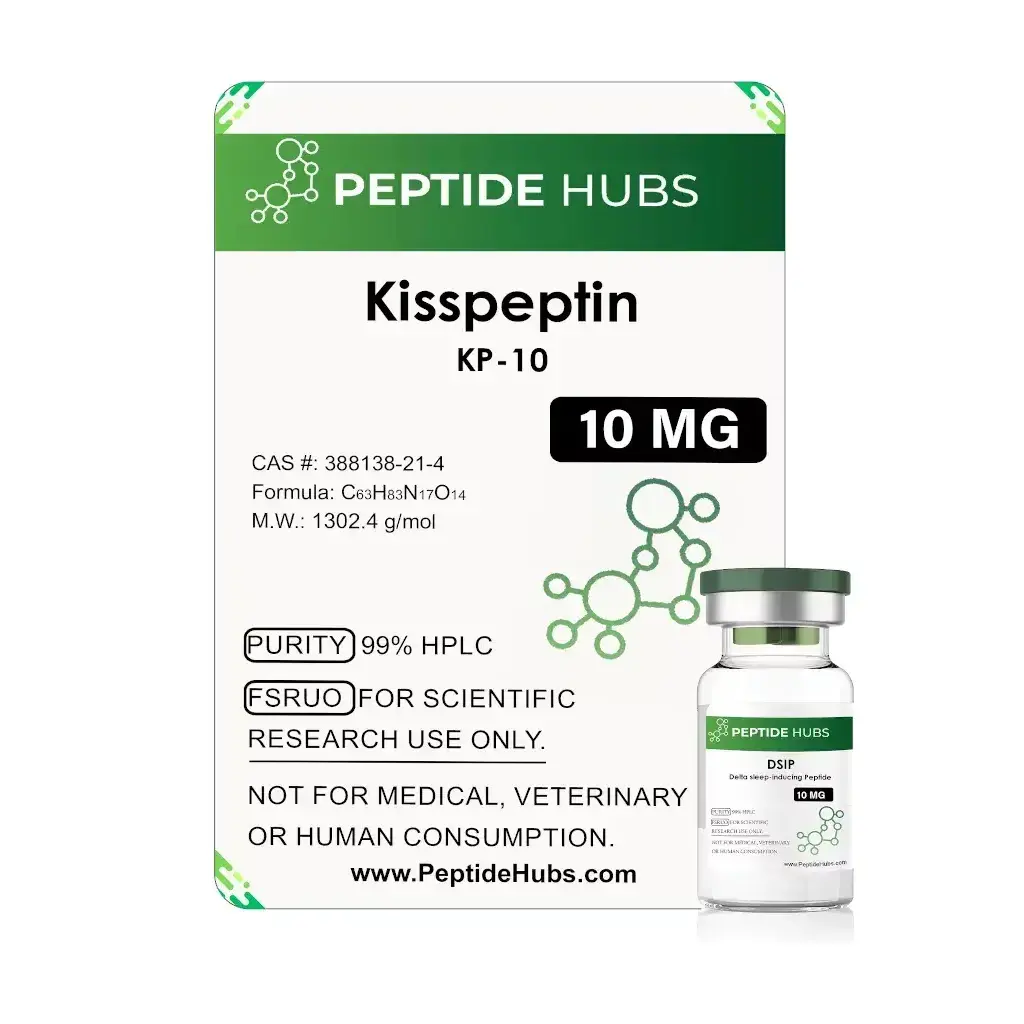
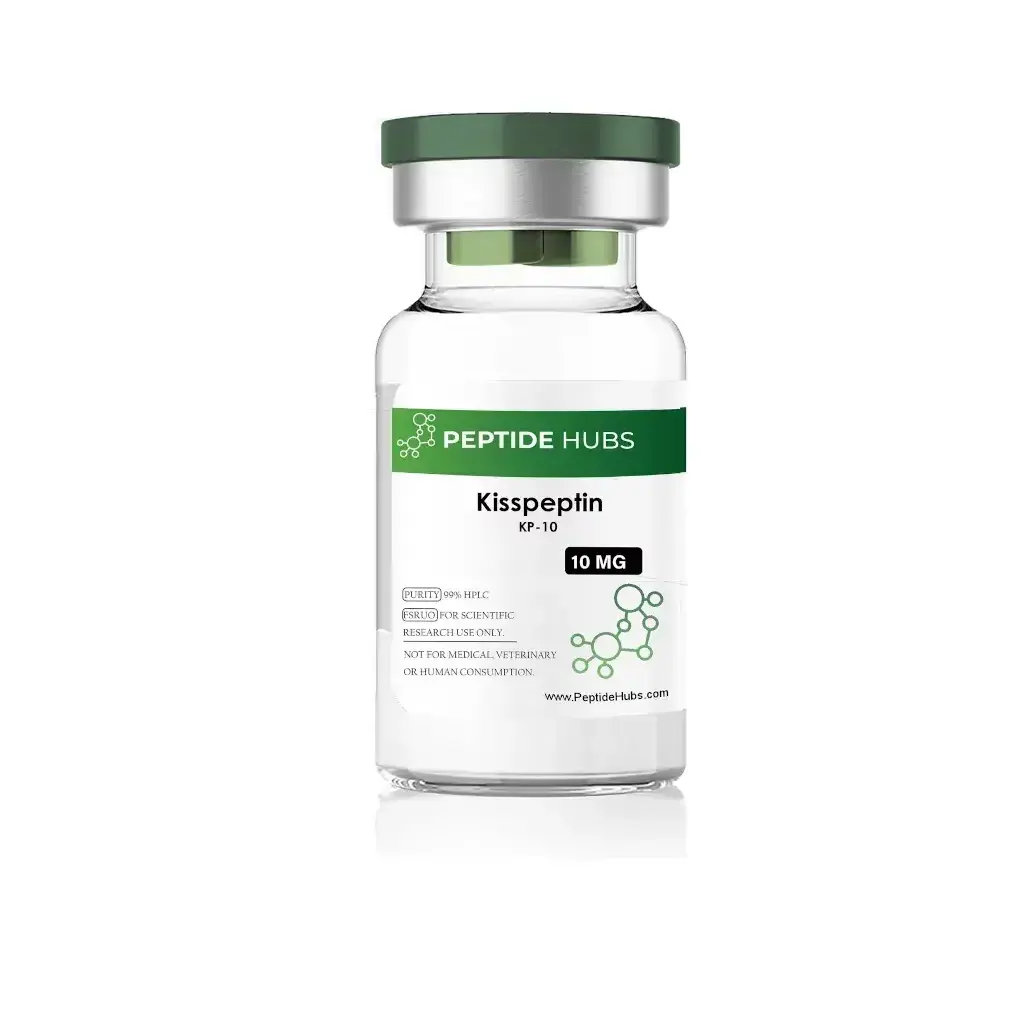
Neuropeptide (GnRH Secretagogue)
Active Substance: Kisspeptin-10
Manufacturer: Peptide Hubs
Unit: 2 mL Vial (10 mg/vial)
Form: Lyophilized Powder
USA Domestic: 2-7 Days Delivery
International: 5-20 Days Delivery
Kisspeptin (Kisspeptin-10) is a cutting-edge synthetic decapeptide presented as a 10 mg lyophilized powder. This neuropeptide corresponds to the active C-terminal fragment of the full-length kisspeptin protein, the natural ligand for the GPR54 (KISS1R) receptor. Kisspeptin serves as the master upstream regulator of the hypothalamic-pituitary-gonadal (HPG) axis, directly stimulating the release of Gonadotropin-Releasing Hormone (GnRH). For bodybuilders, athletes, and endocrine researchers, Kisspeptin offers a sophisticated and direct research model for investigating the stimulation of luteinizing hormone (LH), follicle-stimulating hormone (FSH), and subsequently, sex hormones like testosterone and estrogen. By targeting the fundamental control switch of reproductive endocrinology, Kisspeptin enables studies on hormonal optimization, fertility, and the interplay between metabolic state and gonadal function.
Each sterile 2 mL vial contains 10 mg of synthetic Kisspeptin-10 with the precise sequence: Tyr-Asn-Trp-Asn-Ser-Phe-Gly-Leu-Arg-Phe-NH₂. This decapeptide is the minimal fully active fragment (amino acids 112-121) of the full 145-amino acid kisspeptin-1 (metastin) protein. The product is supplied as a pure, white lyophilized powder without additives, requiring reconstitution with bacteriostatic water before use in research protocols. Its small size and stability make it an ideal tool for neuroendocrine research.
Kisspeptin's primary research interest for athletes centers on its potential to directly and potently stimulate the body's own testosterone production via the natural HPG axis. Investigational benefits include: potent stimulation of GnRH, leading to increased secretion of LH and FSH from the pituitary gland; subsequent rise in endogenous testosterone production, which may support muscle protein synthesis, strength, and recovery; potential positive effects on libido and sexual function linked to healthy testosterone levels; research into the relationship between metabolic health, body composition, and gonadal axis function; and a unique model for studying hormonal restoration or optimization without exogenous hormone administration. For researchers exploring natural ways to support the anabolic hormonal environment, Kisspeptin provides a direct pathway to the brain's reproductive command center.
Kisspeptin is a pivotal neuropeptide in reproductive biology, with clinical research applications in diagnosing and treating disorders of puberty and fertility. It acts as the key signal from higher brain centers to the GnRH neurons in the hypothalamus. According to fundamental research summarized by the National Institutes of Health (NIH), kisspeptin and its receptor are essential for the initiation of puberty and the regulation of gonadotropin secretion.
Kisspeptin works by binding with high affinity to its receptor, GPR54 (KISS1R), which is densely expressed on the surface of GnRH neurons in the arcuate and anteroventral periventricular nuclei of the hypothalamus. This binding activates the Gq protein signaling cascade, leading to phospholipase C activation, inositol trisphosphate (IP3) formation, and calcium mobilization. This electrical and biochemical activation triggers the pulsatile release of GnRH into the hypothalamic-pituitary portal system. GnRH then travels to the anterior pituitary to stimulate the synthesis and release of LH and FSH, which in turn act on the gonads (testes or ovaries) to produce sex steroids (testosterone, estradiol) and support gametogenesis.
Research protocols for Kisspeptin in men use subcutaneous injections. Doses studied in clinical research typically range from 1 mcg to 10 mcg per kilogram of body weight, administered as a single bolus or as an infusion. For investigative purposes in athletic models, a common approach is a daily or every-other-day subcutaneous dose of 100-300 mcg (0.1-0.3 mg). Some research explores pulsatile administration to mimic natural physiology. Cycles are typically 4-8 weeks, followed by a break to assess hypothalamic-pituitary feedback and avoid potential desensitization.
Research dosing in female subjects is more complex due to the menstrual cycle. Kisspeptin's effects vary dramatically across follicular and luteal phases. Doses similar to those in men (on a mcg/kg basis) have been used in clinical studies, but research design must account for cycle phase. In postmenopausal women or those with hypothalamic amenorrhea, different dose-response relationships may apply. Kisspeptin research in women is primarily in the realm of reproductive endocrinology and requires specialized design.
Kisspeptin-10 has a relatively short plasma half-life, estimated at a few minutes to tens of minutes. However, its biological effect—the stimulation of GnRH release—triggers a cascade that results in elevated LH (and subsequently testosterone) for several hours. The pulsatile nature of GnRH release is crucial, so research protocols often use single daily injections or explore more frequent, smaller pulses to study different aspects of axis stimulation.
Research indicates Kisspeptin is generally well-tolerated at appropriate doses. Side effects are related to its hormonal action and can include mild flushing, nausea, or headache shortly after injection, similar to other hormone-releasing peptides. In men, it can cause a transient rise in testosterone, which is the intended effect. There is a theoretical risk of desensitizing the GnRH system with chronic, non-pulsatile administration. Unlike direct GnRH analogs, it works through the natural upstream pathway, which may offer a safer profile in terms of avoiding complete axis shutdown.
Kisspeptin is contraindicated in research involving subjects with hormone-sensitive cancers (e.g., prostate, breast). It should be used with caution in subjects with pre-existing endocrine disorders. Research in women of childbearing potential requires careful consideration of pregnancy status and menstrual cycle phase. It is not for use in subjects with known hypersensitivity. Kisspeptin is for controlled laboratory research into neuroendocrinology only.
Excessive dosing could lead to an exaggerated hormonal response (very high LH/FSH/testosterone), potentially causing symptoms of hormone excess (agitation, acne, etc.) or increasing the risk of desensitization of the GnRH neurons. The primary acute risk is amplification of the flushing/nausea side effects. Adherence to established microgram-per-kilogram dosing is essential to study its physiological effects without inducing a pharmacological overload.
Kisspeptin is typically researched as a standalone agent to study the HPG axis. It can be combined with other peptides for broader endocrine or performance research, but caution is needed to avoid overstimulation.
The product is supplied as one sterile glass vial containing 10 mg of Kisspeptin-10 as a white lyophilized powder. The vial is sealed with a rubber stopper and aluminum crimp to ensure sterility. Packaging is discreet and secure.
For long-term stability, store the lyophilized powder at or below -20°C (-4°F). For short-term use, refrigeration at 2-8°C (36-46°F) is acceptable. After reconstitution with bacteriostatic water, the solution must be refrigerated and used within 7-10 days, following standard peptide handling protocols to maintain activity.
The discovery of kisspeptin and its receptor in the early 2000s revolutionized the understanding of pubertal timing and GnRH regulation. Key references include the seminal papers identifying mutations in GPR54 as a cause of idiopathic hypogonadotropic hypogonadism and subsequent studies characterizing kisspeptin's potent GnRH-releasing activity. Researchers should consult this modern endocrine literature to appreciate kisspeptin's role as the master regulator of the reproductive axis and its potential as a research tool for manipulating gonadal function.
Kisspeptin is a neuropeptide that acts as the primary stimulator of Gonadotropin-Releasing Hormone (GnRH) neurons in the brain. When Kisspeptin is administered, it binds to receptors on these neurons, causing them to release GnRH. GnRH then signals the pituitary gland to release Luteinizing Hormone (LH) and Follicle-Stimulating Hormone (FSH). LH directly stimulates the Leydig cells in the testes to produce testosterone. Therefore, Kisspeptin research explores a natural, upstream method to potentially increase endogenous testosterone production through the body's own hormonal cascade.
Yes, Peptide Hubs is a reputable and legit supplier of research peptides. Their Kisspeptin 10 mg vial is synthesized to high purity standards, ensuring researchers receive an accurately sequenced and potent decapeptide. For advanced neuroendocrine research, a reliable source is critical, and Peptide Hubs provides the quality necessary for such studies.
Kisspeptin research investigates a fundamentally different approach. Taking exogenous testosterone suppresses the body's natural HPG axis (leading to shutdown of LH/FSH and testicular atrophy). Kisspeptin, in contrast, is studied for its ability to *stimulate* the axis, potentially increasing the body's own production of GnRH, LH, FSH, and consequently, natural testosterone. This makes it a subject for research on restoring or enhancing physiological hormone production rather than replacing it.
Based on clinical studies, common research doses for men range from 1 to 10 micrograms (mcg) per kilogram of body weight, administered subcutaneously. For a 70 kg subject, this translates to 70-700 mcg per dose. In exploratory athletic research, doses often fall in the 100-300 mcg (0.1-0.3 mg) range, administered once daily or every other day. The goal is to find a dose that stimulates the axis without causing desensitization.
Yes, these are primary areas of kisspeptin research. By stimulating GnRH and subsequently LH/FSH, kisspeptin is fundamental to gonadal function and gamete production (sperm/eggs). Its potential to increase testosterone in men may also positively influence libido. Research on kisspeptin therefore spans reproductive medicine, fertility treatments, and studies on sexual desire linked to hormonal status. It's a key peptide for understanding the central control of reproduction.
Please log in to write Kisspeptin 10 mg review.
Synthetic Peptide
Active Substance: Bremelanotide
Brand: Peptide Hubs
Unit: 2 mL Vial (10 mg/vial)
Form: Lyophilized Powder
Laboratory Tested: View Lab Result
USA Domestic: 2-7 Days Delivery
International: 5-20 Days Delivery
Research Peptide Blend
Active Substances:
- Ac-KPV-NH2 10 mg
- BPC 157 10 mg
- TB 500 10 mg
- GHK-Cu 50 mg
Manufacturer: Peptide Hubs
Unit: 2 mL Vial (80 mg/vial)
Form: Lyophilized Powder
Laboratory Tested: View Lab Result
USA Domestic: 2-7 Days Delivery
International: 5-20 Days Delivery
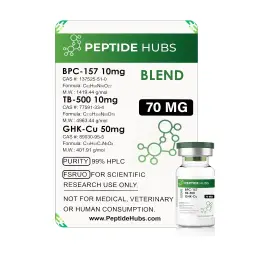
Advanced Healing & Recovery Blend
Active Substances:
- BPC-157 10 mg
- TB-500 10 mg
- GHK-Cu 50 mg
Manufacturer: Peptide Hubs
Unit: 2 mL Vial (70 mg total blend)
Form: Lyophilized Powder
Laboratory Tested: View Lab Result
USA Domestic: 2-7 Days Delivery
International: 5-20 Days Delivery
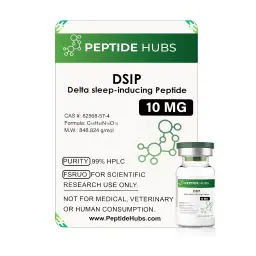
Neuropeptide
Active Substance: DSIP (Delta Sleep-Inducing Peptide)
Manufacturer: Peptide Hubs
Unit: 2 mL Vial (10 mg/vial)
Form: Lyophilized Powder
USA Domestic: 2-7 Days Delivery
International: 5-20 Days Delivery
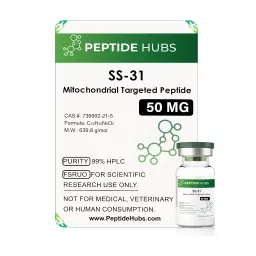
Mitochondrial-Targeted Tetrapeptide
Active Substance: SS-31 (Elamipretide)
Brand: Peptide Hubs
Unit: 2 mL Vial (50 mg/vial)
Form: Lyophilized Powder
USA Domestic: 2-7 Days Delivery
International: 5-20 Days Delivery

Immunomodulatory Peptide
Active Substance: Thymosin Alpha-1
Brand: Peptide Hubs
Unit: 2 mL Vial (10 mg/vial)
Form: Lyophilized Powder
Laboratory Tested: View Lab Result
USA Domestic: 2-7 Days Delivery
International: 5-20 Days Delivery
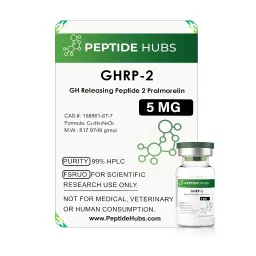
Growth Hormone Releasing Peptide
Active Substance: GHRP-2 (D-Ala-D-β-Nal-Ala-Trp-D-Phe-Lys-NH2)
Manufacturer: Peptide Hubs
Unit: 2 mL Vial (5 mg/vial)
Form: Lyophilized Powder
Laboratory Tested: View Lab Result
USA Domestic: 2-7 Days Delivery
International: 5-20 Days Delivery
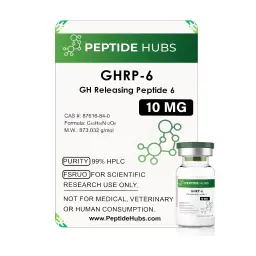
Growth Hormone Releasing Peptide
Active Substance: GHRP-6 (His-D-Trp-Ala-Trp-D-Phe-Lys-NH2)
Manufacturer: Peptide Hubs
Unit: 2 mL Vial (10 mg/vial)
Form: Lyophilized Powder
USA Domestic: 2-7 Days Delivery
International: 5-20 Days Delivery