

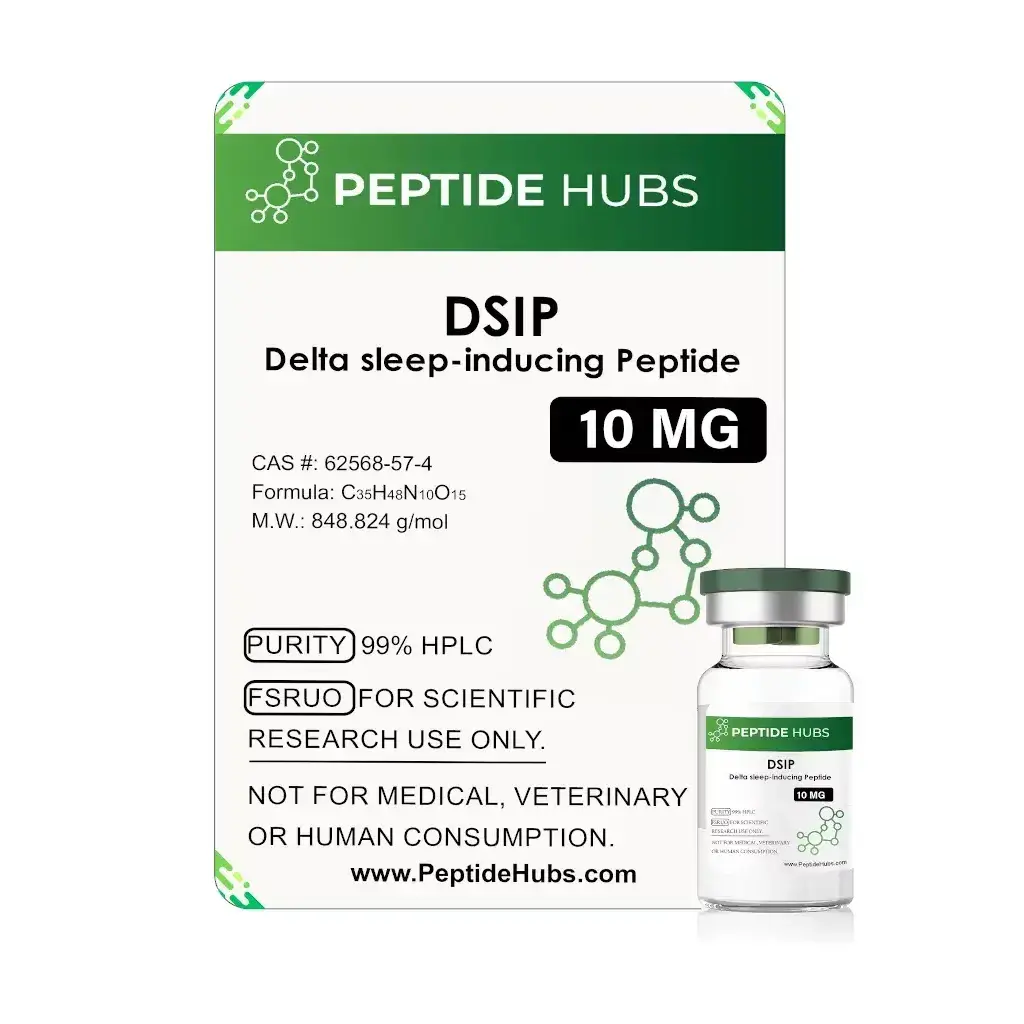
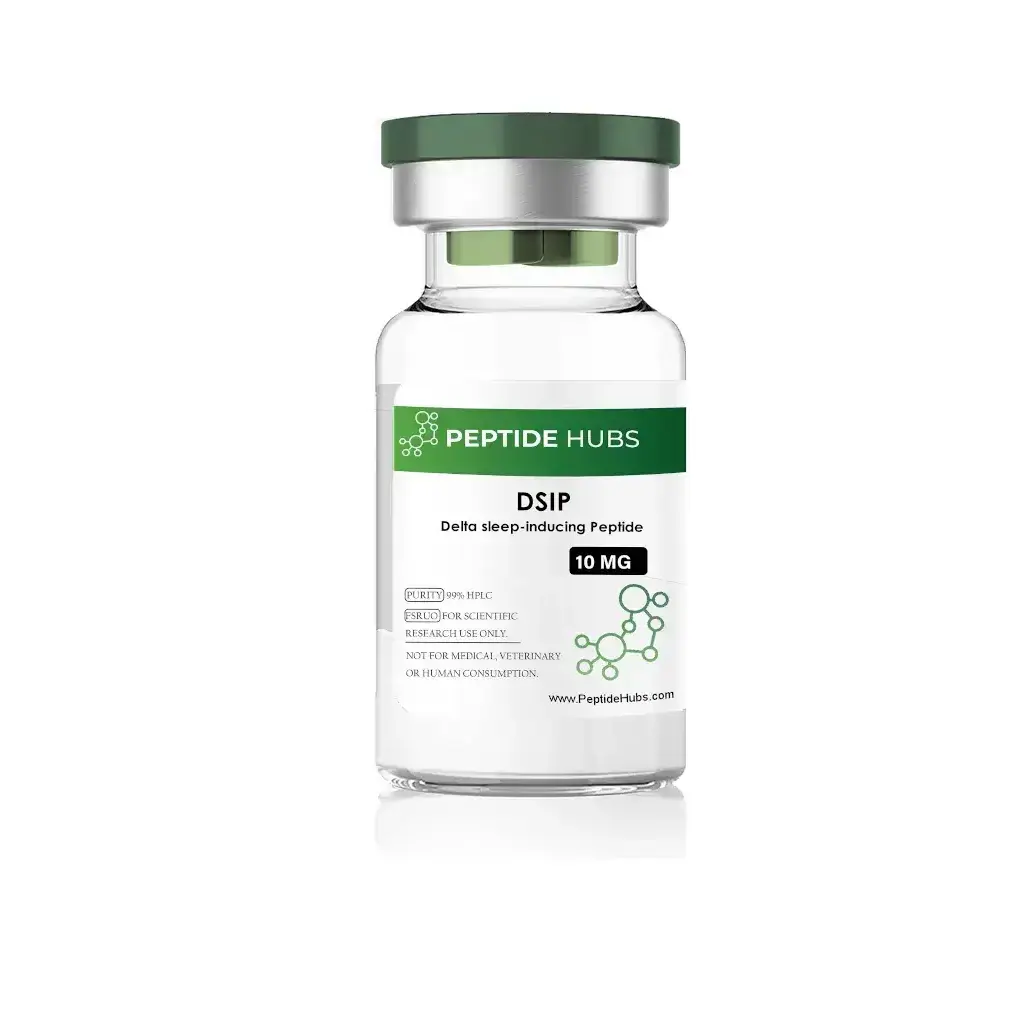
Neuropeptide
Active Substance: DSIP (Delta Sleep-Inducing Peptide)
Manufacturer: Peptide Hubs
Unit: 2 mL Vial (10 mg/vial)
Form: Lyophilized Powder
USA Domestic: 2-7 Days Delivery
International: 5-20 Days Delivery
Peptide Hubs presents DSIP (Delta Sleep-Inducing Peptide), a 10 mg vial of high-purity synthetic neuropeptide in lyophilized powder form. Discovered in the 1970s, this endogenous nonapeptide (9 amino acids) is naturally produced in the hypothalamus and plays a multifaceted role in regulating sleep architecture, modulating stress response, and influencing neuroendocrine balance. For bodybuilders, athletes, and fitness researchers, DSIP offers a unique investigative pathway into optimizing one of the most critical yet often neglected components of performance and recovery: deep, restorative sleep. By researching its potential to enhance sleep quality and modulate stress hormones, DSIP may serve as a foundational tool for studies aimed at improving training adaptation, mental resilience, and overall physiological homeostasis.
Each sterile 2 mL vial contains 10 mg of synthetic DSIP with the amino acid sequence: Trp-Ala-Gly-Gly-Asp-Ala-Ser-Gly-Glu. This nonapeptide is identical to the endogenous human DSIP molecule. The product is supplied as a white, lyophilized powder without additives or preservatives, requiring reconstitution with bacteriostatic water before use in a research setting. This pure formulation ensures researchers are working with the exact peptide that occurs naturally in the human brain.
In research models, DSIP's primary investigational benefits for athletes revolve around its profound impact on recovery and anabolic environment. By potentially promoting deeper, more efficient sleep (particularly increasing slow-wave delta sleep), DSIP is studied for its indirect but powerful effects on performance: optimizing the release of endogenous growth hormone and testosterone that occur during deep sleep, enhancing systemic recovery and muscle repair, reducing cortisol levels and improving resilience to physical and mental stress, and supporting cognitive function and mood—critical for consistent training motivation. For athletes struggling with sleep disruption due to intense training, travel, or stress, DSIP presents a compelling research subject for restoring this vital pillar of health.
While a research chemical, DSIP has been studied in clinical contexts for sleep disorders, opioid withdrawal, and stress-related conditions. Its mechanisms are complex and involve modulation of multiple neurotransmitter systems (including serotonin, GABA, and dopamine) and the hypothalamic-pituitary-adrenal (HPA) axis. According to reviews in resources like the National Institutes of Health (NIH), DSIP exhibits sleep-modulating, analgesic, and stress-protective properties.
DSIP does not act as a simple sedative. Instead, it functions as a neuromodulator that helps normalize brain activity to facilitate the natural transition into deep, slow-wave (delta) sleep. It appears to influence the balance of neurotransmitters, potentially increasing GABAergic (calming) activity while modulating monoamine systems. Crucially, it interacts with the HPA axis, helping to lower elevated cortisol levels, which are both a cause and consequence of poor sleep. It may also influence beta-endorphin levels, contributing to its studied analgesic and stress-buffering effects. This multi-target action makes it a subject of interest for holistic regulation of sleep-wake cycles and stress physiology.
Research protocols for DSIP vary due to its biphasic dose-response relationship. Common investigative doses in sleep research range from 25 mcg to 150 mcg per night, administered via subcutaneous injection approximately 30-60 minutes before intended sleep. Some protocols use doses on the lower end (25-50 mcg) for sleep maintenance, while higher doses (100-150 mcg) might be explored for sleep initiation or stress modulation. It is typically researched in nightly cycles of 10-30 days. Intranasal administration is also explored in some research for direct CNS delivery.
Research dosing for female subjects generally follows similar microgram protocols, often starting at the lower range (e.g., 25-50 mcg nightly). Hormonal fluctuations across the menstrual cycle can affect sleep architecture and stress sensitivity, which may be an interesting variable in research design. Conservative dose initiation and careful observation of response are standard practice.
The pharmacokinetics of DSIP in humans are not fully characterized, but animal studies suggest a relatively short plasma half-life. However, its effects on sleep architecture and cortisol levels can be observed for several hours after administration, influencing the entire sleep period. Its neuromodulatory action suggests it may help "reset" or facilitate natural processes rather than exerting a continuous direct effect, which is why nightly pre-sleep administration is the standard research approach.
Research indicates DSIP has a very favorable safety profile with minimal side effects at appropriate doses. Due to its endogenous origin and neuromodulatory (rather than strongly depressive) action, it is not associated with morning grogginess, dependency, or respiratory depression—common drawbacks of traditional sleep aids. Some subjects in studies report vivid dreams. At very high, non-research doses, it may potentially cause lethargy. Its excellent tolerance makes it suitable for longer-term research protocols.
There are no known specific contraindications, but standard research precautions apply. It should not be used in studies involving subjects with severe, untreated psychiatric conditions without appropriate oversight. Research involving subjects concurrently using other CNS depressants (alcohol, benzodiazepines) should be designed with extreme caution. DSIP is for laboratory research only and is not for human consumption or as a sleep aid.
Extremely high doses could theoretically lead to excessive sedation or disruption of normal sleep architecture. Given its modulatory role, the risks of acute toxicity are considered low. However, responsible research always adheres to established microgram dosing ranges to study its intended effects without causing imbalance in the very systems it is designed to regulate.
DSIP can be researched in combination with other peptides that target complementary aspects of recovery, growth, or stress management. Potential research stacks include:
These stacks represent advanced concepts for holistic performance and recovery research.
The product is supplied as one sterile glass vial containing 10 mg of DSIP as a white lyophilized powder. The vial is sealed with a rubber stopper and aluminum crimp to ensure sterility and is shipped in discreet, secure packaging.
For maximum stability of the lyophilized powder, store at or below -20°C (-4°F). For short-term use, refrigeration at 2-8°C (36-46°F) is acceptable. After reconstitution with bacteriostatic water, the solution must be refrigerated and used within the timeframe specified by sterile research guidelines, typically within 7-10 days, to maintain peptide integrity.
The scientific literature on DSIP spans several decades, with studies exploring its effects on sleep, pain, addiction, and stress. Key references include early discovery papers and subsequent clinical trials investigating its therapeutic potential. Researchers are encouraged to review this historical and modern literature to understand the full scope of DSIP's biological activities and to design nuanced studies that build upon existing evidence.
DSIP (Delta Sleep-Inducing Peptide) is an endogenous neuropeptide naturally produced in the brain to help regulate sleep cycles, particularly deep slow-wave (delta) sleep. It differs fundamentally from pharmaceutical sleeping pills, which are typically external sedatives that depress the central nervous system (CNS). DSIP works as a neuromodulator, helping to normalize and facilitate the body's own sleep processes without causing CNS depression, dependency, or morning grogginess. It's researched for its ability to improve sleep architecture and quality, not just induce unconsciousness.
Yes, Peptide Hubs is a recognized and legit supplier of research peptides. They provide high-purity, accurately synthesized DSIP in a 10 mg vial. Their commitment to quality is demonstrated through stringent manufacturing processes and reliable sourcing. Researchers choose Peptide Hubs for consistent, high-grade compounds for their investigative work into neuropeptides and sleep science.
For athletic research, DSIP is studied for its potential to enhance the quality and depth of sleep, which is when the body performs crucial recovery, muscle repair, and anabolic hormone release (like GH and testosterone). By improving sleep efficiency, research explores whether DSIP can lead to better training recovery, improved adaptation to stress, enhanced cognitive function for focus, and better management of cortisol levels. Optimizing sleep is a foundational, non-negotiable component of peak performance, making DSIP a valuable research tool.
Common research protocols involve administering DSIP 30-60 minutes before the intended sleep period. Doses typically range from 25 mcg to 150 mcg per night via subcutaneous injection. Lower doses (25-50 mcg) are often used for sleep maintenance, while higher doses may be explored for sleep initiation or acute stress modulation. Research cycles often last 2-4 weeks to assess effects on sleep patterns and recovery markers. Intranasal administration is also a route of interest for direct brain delivery.
Yes, a significant area of DSIP research involves its interaction with the hypothalamic-pituitary-adrenal (HPA) axis and cortisol regulation. Studies suggest it may have stress-protective properties and help lower elevated cortisol levels. This makes it a compound of interest not only for sleep research but also for studies on physical and psychological stress resilience, anxiety modulation, and overall neuroendocrine balance in demanding environments like competitive sports.
Please log in to write DSIP 10 mg review.
Synthetic Peptide
Active Substance: Bremelanotide
Brand: Peptide Hubs
Unit: 2 mL Vial (10 mg/vial)
Form: Lyophilized Powder
Laboratory Tested: View Lab Result
USA Domestic: 2-7 Days Delivery
International: 5-20 Days Delivery
Synergistic GHRH & GHRP Peptide Blend
Active Substances:
- Tesamorelin (5 mg)
- Ipamorelin (5 mg)
Brand: Peptide Hubs
Unit: 2 mL Vial (10 mg total/vial)
Form: Lyophilized Powder
Laboratory Tested: View Lab Result
USA Domestic: 2-7 Days Delivery
International: 5-20 Days Delivery
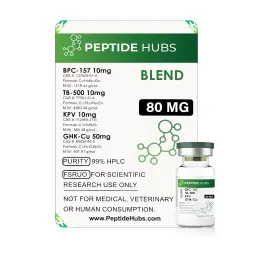
Research Peptide Blend
Active Substances:
- Ac-KPV-NH2 10 mg
- BPC 157 10 mg
- TB 500 10 mg
- GHK-Cu 50 mg
Manufacturer: Peptide Hubs
Unit: 2 mL Vial (80 mg/vial)
Form: Lyophilized Powder
Laboratory Tested: View Lab Result
USA Domestic: 2-7 Days Delivery
International: 5-20 Days Delivery
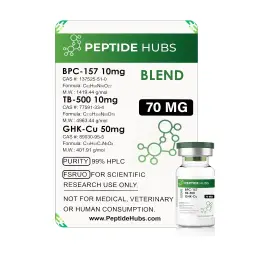
Advanced Healing & Recovery Blend
Active Substances:
- BPC-157 10 mg
- TB-500 10 mg
- GHK-Cu 50 mg
Manufacturer: Peptide Hubs
Unit: 2 mL Vial (70 mg total blend)
Form: Lyophilized Powder
Laboratory Tested: View Lab Result
USA Domestic: 2-7 Days Delivery
International: 5-20 Days Delivery
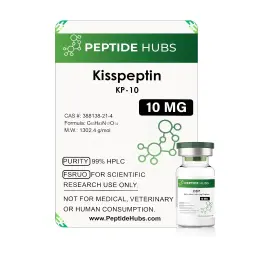
Neuropeptide (GnRH Secretagogue)
Active Substance: Kisspeptin-10
Manufacturer: Peptide Hubs
Unit: 2 mL Vial (10 mg/vial)
Form: Lyophilized Powder
USA Domestic: 2-7 Days Delivery
International: 5-20 Days Delivery

Research Peptide/Fat Loss Peptide
Active Substance: Adipotide (FTPP)
Manufacturer: Peptide Hubs
Unit: 2 mL Vial (10 mg/vial)
Form: Lyophilized Powder
Laboratory Tested: View Lab Result
USA Domestic: 2-7 Days Delivery
International: 5-20 Days Delivery
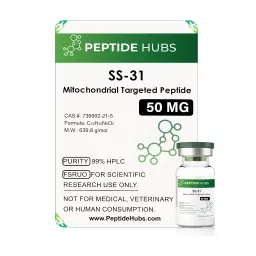
Mitochondrial-Targeted Tetrapeptide
Active Substance: SS-31 (Elamipretide)
Brand: Peptide Hubs
Unit: 2 mL Vial (50 mg/vial)
Form: Lyophilized Powder
USA Domestic: 2-7 Days Delivery
International: 5-20 Days Delivery

Immunomodulatory Peptide
Active Substance: Thymosin Alpha-1
Brand: Peptide Hubs
Unit: 2 mL Vial (10 mg/vial)
Form: Lyophilized Powder
Laboratory Tested: View Lab Result
USA Domestic: 2-7 Days Delivery
International: 5-20 Days Delivery