
Research Peptide/Fat Loss Peptide
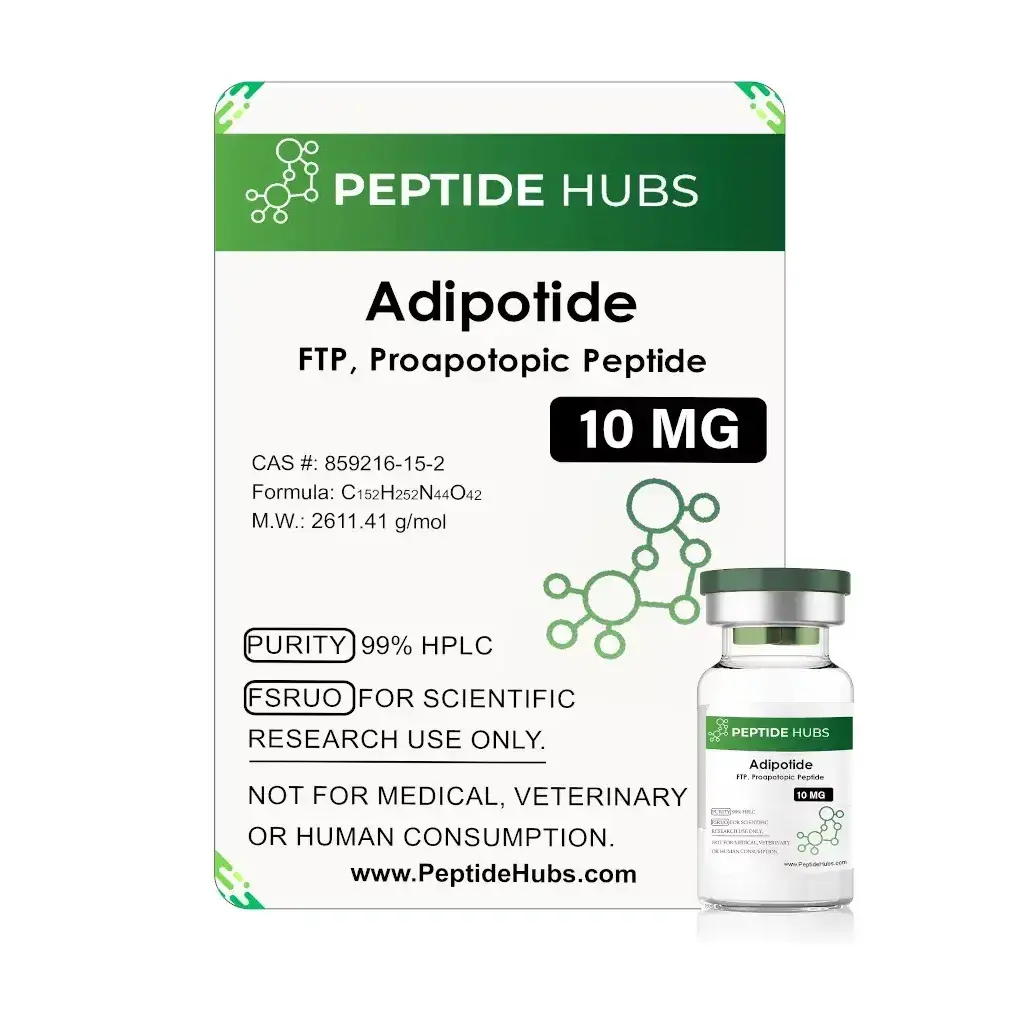
Active Substance: Adipotide (FTPP)
Manufacturer: Peptide Hubs
Unit: 2 mL Vial (10 mg/vial)
Form: Lyophilized Powder
Laboratory Tested: View Lab Result
USA Domestic: 2-7 Days Delivery
International: 5-20 Days Delivery
Adipotide, also known as FTPP (Fat-Targeted Proapoptotic Peptide), represents a targeted research peptide designed for investigative use in metabolic and body composition studies. This lyophilized powder comes in a 10 mg vial, with third-party lab verification confirming a potency of 10.49 mg, ensuring researchers receive a precisely dosed and high-quality product. For bodybuilders, athletes, and fitness enthusiasts engaged in advanced research, Adipotide offers a unique mechanism of action by targeting the blood supply to white adipose tissue, making it a compound of significant interest in cutting-phase protocols.
Each vial contains 10 mg of the synthetic peptide Adipotide (FTPP) as a sterile, lyophilized powder. The peptide sequence is designed to bind to a protein on the surface of blood vessels that supply white fat cells, initiating a targeted process. The product contains no fillers or preservatives, and it requires reconstitution with bacteriostatic water before use in a research setting.
In research models, Adipotide has shown potential for influencing body composition by targeting stubborn fat deposits. For athletes and bodybuilders, its primary investigational benefits include the potential reduction of visceral and subcutaneous adipose tissue without systemic catabolic effects on muscle. This makes it a subject of interest for achieving ultra-lean, defined physiques, particularly when diet and exercise plateau. Research suggests it may help in targeting specific problem areas that are traditionally resistant to fat loss.
While primarily a research chemical, Adipotide's mechanism has been studied in preclinical models for obesity and related metabolic conditions. Its action involves binding to prohibitin, a protein expressed on the surface of endothelial cells in white adipose tissue vasculature, and inducing apoptosis (cell death) in those blood vessels. This cuts off the nutrient supply to fat cells, leading to their reduction. It's crucial to note that authoritative sources like the National Institutes of Health (NIH) have published on its mechanism, underscoring its role as a serious research tool, not a consumer supplement.
Research dosage protocols for Adipotide are not standardized for human use, as it remains an investigational peptide. Preclinical studies have used specific dosing schedules based on body weight. Researchers must consult published literature and establish strict, minimal-dose protocols. A common approach in research settings involves a carefully calculated microgram-per-kilogram dose, administered via subcutaneous injection. Cycles are typically short-term due to the peptide's potent mechanism. Starting at the lowest possible research dose is paramount.
Due to the potent and targeted nature of Adipotide, extreme caution is advised in any research involving female subjects. Hormonal fluctuations can influence fat distribution and metabolism, potentially altering the response. Dosing in research models is typically weight-based, and any protocol must be even more conservative than those considered for male subjects. Comprehensive understanding of its localized effects is required before any investigative use.
The active life of Adipotide after administration in research models is relatively short, often estimated at several hours. However, its biological *effects* on adipose tissue vasculature are cumulative and may manifest over days following a cycle of administration. The peptide is typically cleared from the systemic circulation rapidly, but the induced changes in fat tissue are longer-lasting.
In research models, observed effects have included increased urination and thirst due to kidney tissue expressing a similar target protein. This underscores the importance of targeted research and monitoring kidney function parameters. Other potential research side effects can include temporary fatigue and minor irritation at the injection site. Its targeted action means side effects are related to its mechanism and require careful observation.
Adipotide is contraindicated in research involving subjects with pre-existing kidney conditions or impairment. It should not be used in conjunction with other compounds that stress renal function. Researchers must ensure subjects are well-hydrated. A full review of the subject's health status is mandatory prior to consideration in any study. It is for research purposes only and not for human consumption or therapeutic use.
Exceeding research-level dosages drastically increases the risk of adverse effects, particularly renal toxicity. Symptoms of overdosage in models include severe dehydration and acute kidney stress. In a research context, immediate cessation and supportive measures focused on hydration and electrolyte balance are critical. It highlights the necessity of precise dosing and rigorous research protocols.
In investigative body composition studies, Adipotide is often researched in a "cutting" context. It may be stacked with other research peptides that support fat metabolism or preserve lean mass, but extreme caution is required to avoid synergistic toxicity. Potential research stacks could include:
All stacks are hypothetical and for advanced research design only.
The product is supplied as one sterile glass vial containing 10 mg of Adipotide (FTPP) as a white lyophilized powder. The vial is sealed and shipped with a protective cap. Each shipment is discreet and secure.
Store the lyophilized powder in a cool, dry place, away from direct light. For long-term stability, store at or below -20°C (-4°F). After reconstitution with bacteriostatic water, the solution should be refrigerated at 2-8°C (36-46°F) and used within a short timeframe as per sterile research guidelines.
The mechanism of Adipotide has been documented in scientific literature. Key referrers include studies published through the NIH's PubMed database, which detail its proapoptotic effect on white adipose tissue vasculature. These resources are essential for any researcher to understand the compound's history, mechanism, and potential implications fully.
Adipotide, or FTPP, is a synthetic research peptide designed to target and disrupt the blood supply (vasculature) to white adipose tissue (fat). It works by binding to a specific protein (prohibitin) on the surface of blood vessels that feed fat cells, triggering programmed cell death (apoptosis) in those vessels. This cuts off nutrients to the fat cells, leading to their reduction. It's a subject of research for targeted fat loss, distinct from systemic metabolic agents.
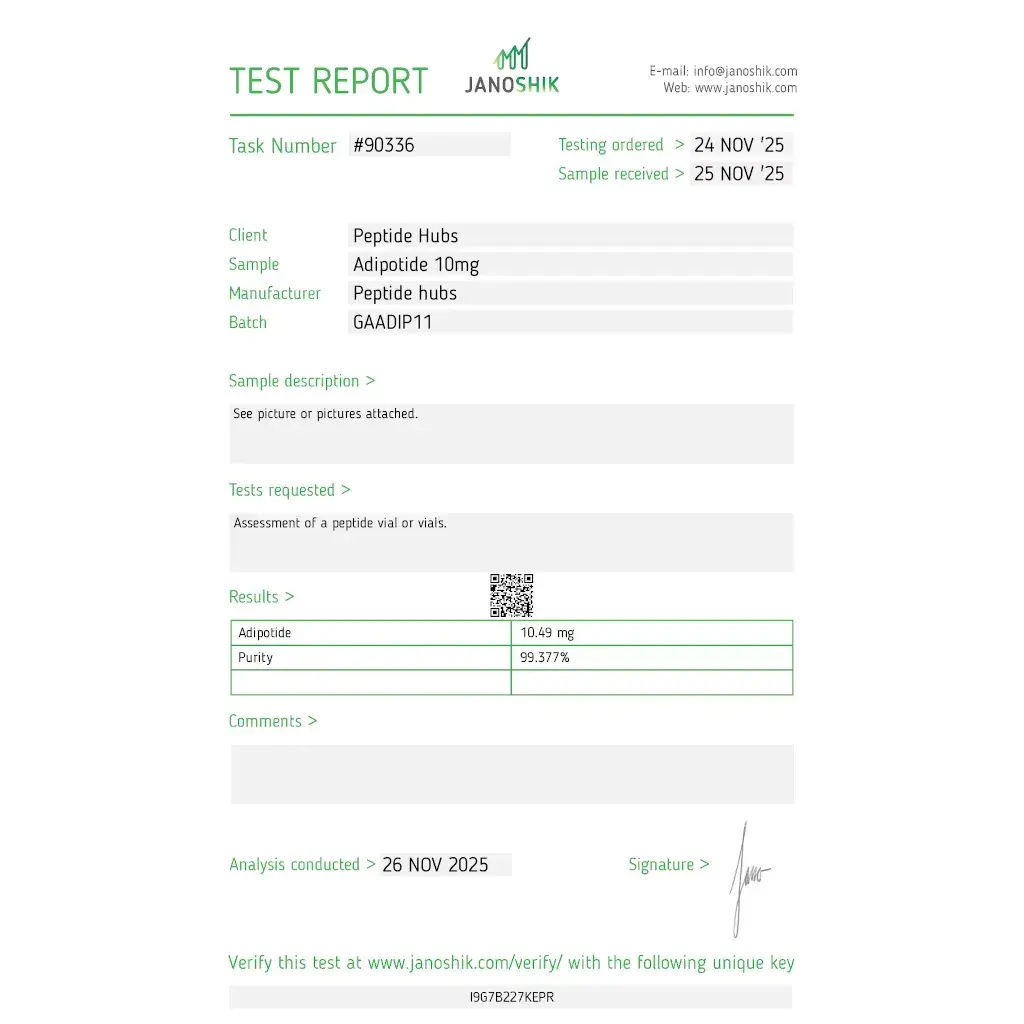
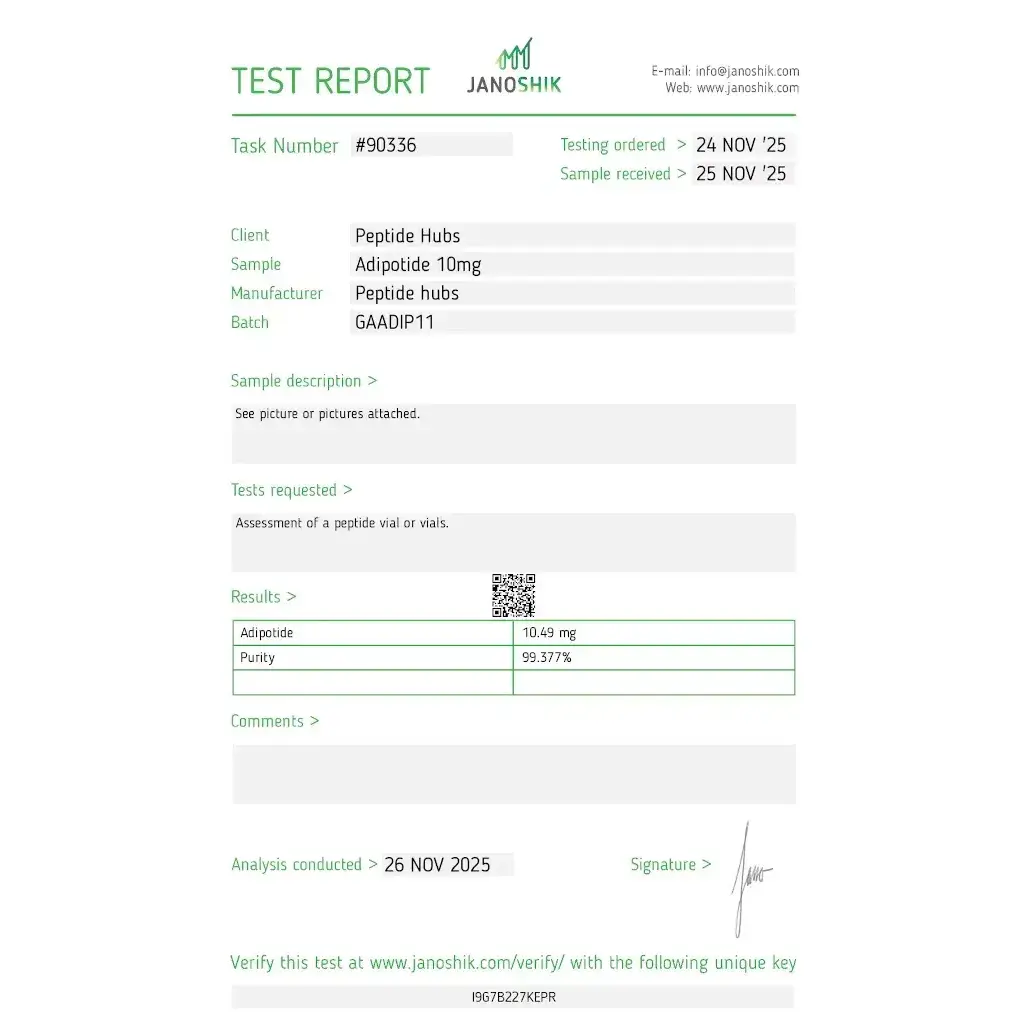
Yes. This specific batch of Peptide Hubs Adipotide has been independently third-party lab tested, verifying its purity and dosage. The lab report (dated 2025-11-26) confirms a content of 10.49 mg per vial, exceeding the labeled 10 mg, which demonstrates accurate and high-quality manufacturing. This commitment to verification makes Peptide Hubs a legit source for research peptides.
There is no established human dosage, as Adipotide is strictly for research purposes. Preclinical studies use weight-based microgram protocols. In research settings, extreme caution is used, often starting at the lowest possible dose reported in scientific literature for the specific model. Dosage is critical due to its targeted mechanism and potential renal effects. Researchers must design their own protocols based on a thorough review of available studies.
The most notable effect observed in research models is related to kidney function, as some kidney cells also express the target protein. This can manifest as increased urine output and thirst. Other potential research observations include transient fatigue and injection site reactions. Monitoring hydration and kidney health markers is a crucial part of any investigative protocol involving this peptide.
It can be researched in combination with other agents, but stacking requires careful consideration to avoid additive stress, particularly on the kidneys. Potential research combinations for body composition studies might include peptides like AOD 9604, Tesamorelin, or GHRP-6, but they should not be administered simultaneously without a rigorous study design. Peptides like BPC 157 might be researched in a recovery phase after an Adipotide cycle. All stacks are for advanced experimental design only.
Please log in to write Adipotide (FTPP) 10 mg review.
Synthetic Peptide
Active Substance: Bremelanotide
Brand: Peptide Hubs
Unit: 2 mL Vial (10 mg/vial)
Form: Lyophilized Powder
Laboratory Tested: View Lab Result
USA Domestic: 2-7 Days Delivery
International: 5-20 Days Delivery
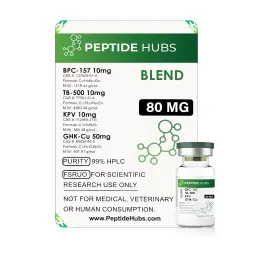
Research Peptide Blend
Active Substances:
- Ac-KPV-NH2 10 mg
- BPC 157 10 mg
- TB 500 10 mg
- GHK-Cu 50 mg
Manufacturer: Peptide Hubs
Unit: 2 mL Vial (80 mg/vial)
Form: Lyophilized Powder
Laboratory Tested: View Lab Result
USA Domestic: 2-7 Days Delivery
International: 5-20 Days Delivery
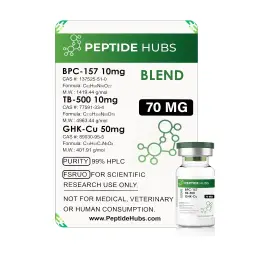
Advanced Healing & Recovery Blend
Active Substances:
- BPC-157 10 mg
- TB-500 10 mg
- GHK-Cu 50 mg
Manufacturer: Peptide Hubs
Unit: 2 mL Vial (70 mg total blend)
Form: Lyophilized Powder
Laboratory Tested: View Lab Result
USA Domestic: 2-7 Days Delivery
International: 5-20 Days Delivery
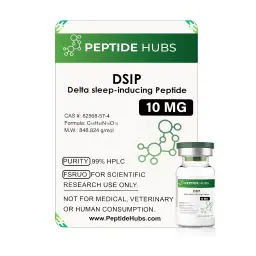
Neuropeptide
Active Substance: DSIP (Delta Sleep-Inducing Peptide)
Manufacturer: Peptide Hubs
Unit: 2 mL Vial (10 mg/vial)
Form: Lyophilized Powder
USA Domestic: 2-7 Days Delivery
International: 5-20 Days Delivery
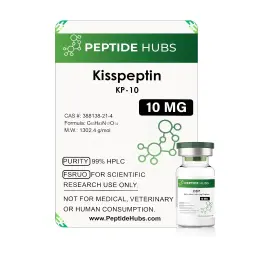
Neuropeptide (GnRH Secretagogue)
Active Substance: Kisspeptin-10
Manufacturer: Peptide Hubs
Unit: 2 mL Vial (10 mg/vial)
Form: Lyophilized Powder
USA Domestic: 2-7 Days Delivery
International: 5-20 Days Delivery
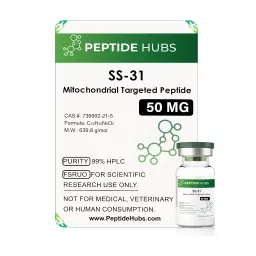
Mitochondrial-Targeted Tetrapeptide
Active Substance: SS-31 (Elamipretide)
Brand: Peptide Hubs
Unit: 2 mL Vial (50 mg/vial)
Form: Lyophilized Powder
USA Domestic: 2-7 Days Delivery
International: 5-20 Days Delivery
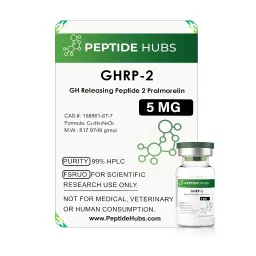
Growth Hormone Releasing Peptide
Active Substance: GHRP-2 (D-Ala-D-β-Nal-Ala-Trp-D-Phe-Lys-NH2)
Manufacturer: Peptide Hubs
Unit: 2 mL Vial (5 mg/vial)
Form: Lyophilized Powder
Laboratory Tested: View Lab Result
USA Domestic: 2-7 Days Delivery
International: 5-20 Days Delivery
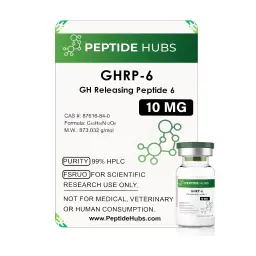
Growth Hormone Releasing Peptide
Active Substance: GHRP-6 (His-D-Trp-Ala-Trp-D-Phe-Lys-NH2)
Manufacturer: Peptide Hubs
Unit: 2 mL Vial (10 mg/vial)
Form: Lyophilized Powder
USA Domestic: 2-7 Days Delivery
International: 5-20 Days Delivery