Research Peptide/Lung Bioregulator
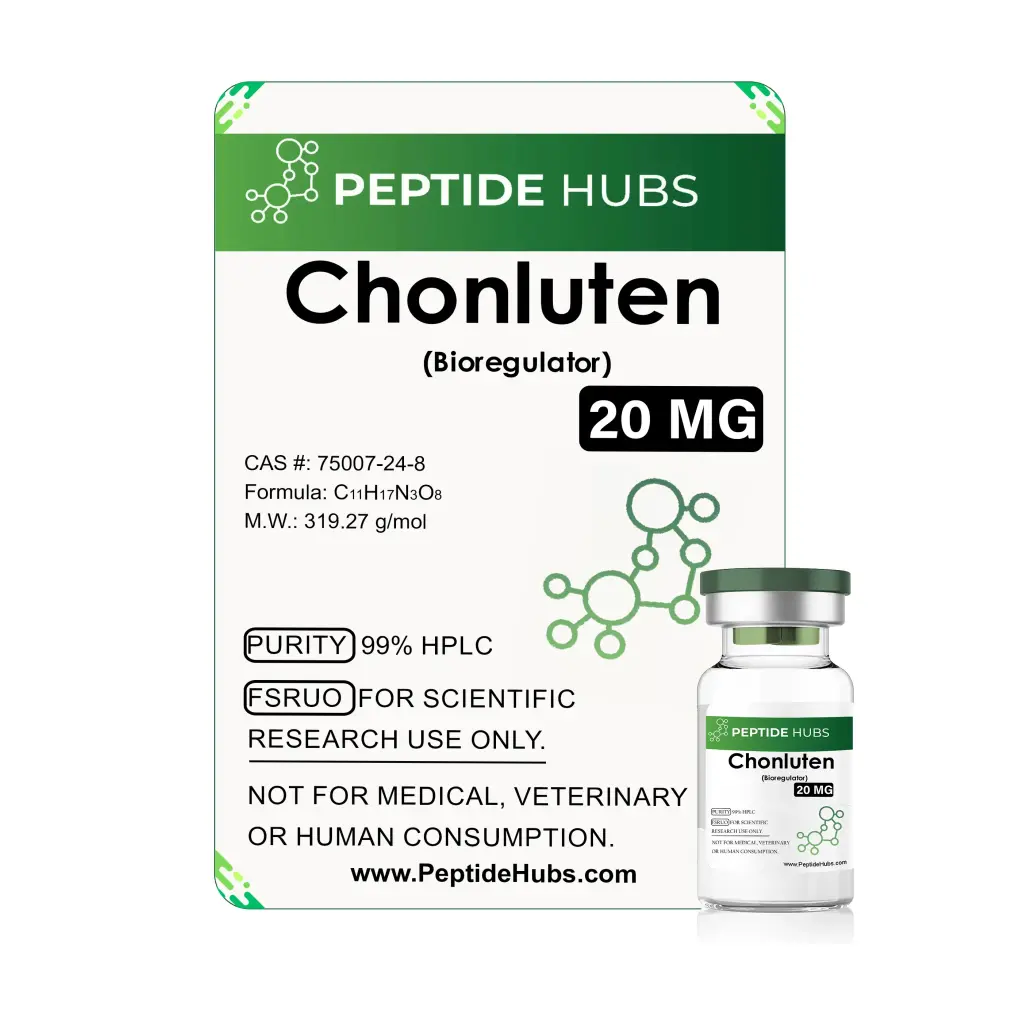
Active Substance: Chonluten
Manufacturer: Peptide Hubs
Unit: 2 mL Vial (20 mg/vial)
Form: Lyophilized Powder
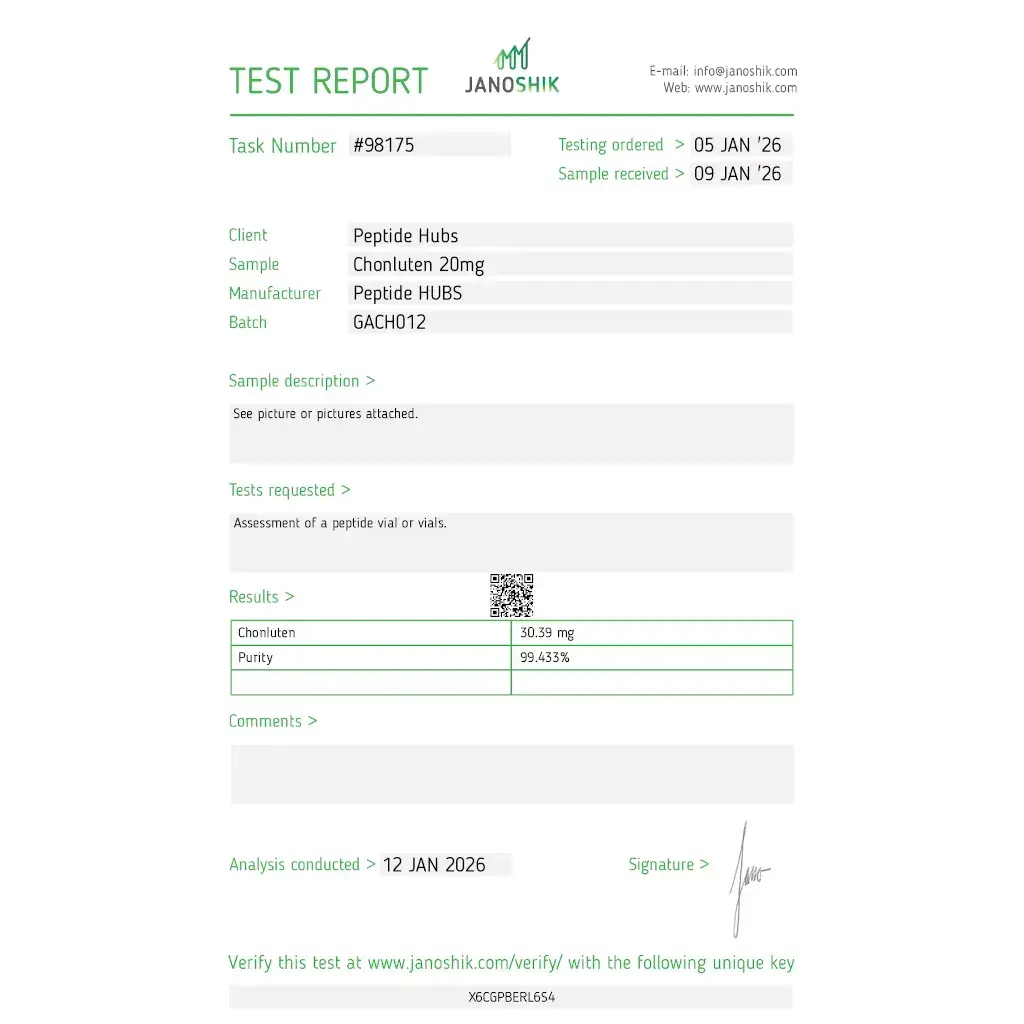
Laboratory Tested: View Lab Result
USA Domestic: 2-7 Days Delivery
International: 5-20 Days Delivery
Chonluten is a highly specialized synthetic peptide bioregulator presented as a 20 mg lyophilized powder. Derived from the principles of cytomax (cytomedin) technology, this peptide consists of short, targeted amino acid sequences designed to modulate gene expression and functional activity specifically in lung tissue. With an independent third-party lab test confirming an exceptional 30.39 mg per vial—over 50% above the labeled 20 mg—researchers receive a premium-grade, precisely dosed compound. For athletes, bodybuilders, and fitness researchers, Chonluten offers a novel avenue for investigating pulmonary optimization, enhanced respiratory efficiency, and systemic antioxidant defense, which are crucial for high-performance endurance and recovery.
Each sterile 2 mL vial contains 20 mg of Chonluten, a synthetic peptide bioregulator composed of specific short-chain amino acid sequences (typically under 10 amino acids) that correspond to bioactive fragments of lung tissue proteins. These peptides are designed to act as signaling molecules that influence cellular activity. The product is supplied as a pure, white lyophilized powder without excipients, requiring reconstitution with bacteriostatic water before research use. This formulation ensures optimal stability and bioavailability for investigative protocols focusing on tissue-specific regulation.
While not a direct anabolic, Chonluten holds significant research interest for athletes by targeting foundational health systems that underpin performance. Its primary investigational benefits include potential support for optimal lung function and respiratory efficiency—critical for cardiovascular endurance and stamina during high-intensity training. Research explores its role in modulating oxidative stress in pulmonary tissues, which may translate to improved systemic recovery from exercise-induced stress. For athletes training at altitude, in polluted environments, or those seeking to maximize VO2 max, Chonluten provides a unique research model for studying peptide-mediated enhancement of respiratory organ resilience and function.
Chonluten falls within the category of peptide bioregulators, a class of compounds studied for their tissue-specific restorative and normalizing effects. Preclinical research indicates its ability to influence epithelial regeneration, balance cytokine profiles, and enhance peptide-mediated antioxidant defense mechanisms within lung tissue. According to foundational research on cytomedins referenced by the National Institutes of Health (NIH), short regulatory peptides can exert profound effects on gene expression and organ function.
Chonluten operates on the principle of peptide-mediated gene regulation. Its short amino acid sequences are believed to act as epigenetic modulators or signaling molecules that bind to specific DNA regions or cellular receptors in lung tissue. This interaction is hypothesized to upregulate the expression of genes responsible for cellular repair, antioxidant enzyme production (like superoxide dismutase and glutathione peroxidase), and optimal functional protein synthesis. Essentially, it may "nudge" lung cells toward a more youthful, resilient, and efficient state, supporting the organ's intrinsic regenerative capacity rather than imposing an external pharmacological effect.
Research protocols for peptide bioregulators like Chonluten differ from those of metabolic peptides. Common investigative approaches use lower, more frequent dosing to mimic natural signaling. A standard research protocol involves subcutaneous or oral administration of 5-10 mg daily, often split into two doses. Cycles are typically longer-term, ranging from 10 to 30 days, sometimes followed by a break before repeating, reflecting a restorative rather than acute interventional model. Some research designs use a "loading" phase of 10-14 days followed by less frequent maintenance dosing.
Research dosing for female subjects generally follows the same milligram-per-day protocols as for men, given its tissue-specific, non-hormonal mechanism. Doses of 5-10 mg daily are common in research settings. The goal is sustained, low-level signaling to support cellular function. As with all research, individual responses should be monitored and documented, though the safety profile of such bioregulators in studies is typically favorable.
The exact pharmacokinetic profile of Chonluten's short peptide sequences is not extensively documented, but similar bioregulators are characterized by relatively short plasma half-lives. However, their intended effect is not based on constant plasma concentration but on triggering a cascade of gene expression changes that persist for hours or days after administration. This is why daily or BID (twice daily) dosing is common in research to provide consistent signaling to the target tissues.
Research on peptide bioregulators like Chonluten has shown an excellent safety profile. Due to their tissue-specific action and natural derivation, significant adverse effects are rare in studies. Reported effects are typically mild and transient, potentially including minor irritation at the injection site (if administered subcutaneously) or very rare, mild hypersensitivity reactions. They are not known to cause hormonal disruption, psychotropic effects, or dependency, making them a low-risk subject for long-term research designs.
There are no known specific contraindications, but standard research precautions apply. It should not be used in studies involving subjects with known hypersensitivity to any component. Research involving subjects with active, severe pulmonary conditions should be designed with extreme caution and under appropriate oversight. Chonluten is for laboratory research use only and is not a drug for diagnosis, treatment, or prevention of disease.
The risk of acute toxicity from overdose is considered very low based on the mechanism and preclinical data. Extremely high doses are unlikely to produce dangerous effects but would be pharmacologically and economically wasteful, as the signaling mechanism is saturable. Responsible research adheres to established microgram or low-milligram dosing schedules to study its intended bio-regulatory effects.
Chonluten can be researched in combination with other peptides that support systemic health, recovery, or organ-specific function. Potential research stacks include:
These combinations represent sophisticated frameworks for holistic health and performance research.
The product is supplied as one sterile glass vial containing 20 mg of Chonluten as a white lyophilized powder. The vial is sealed with a rubber stopper and aluminum crimp to ensure sterility and is shipped in discreet, secure packaging to protect its integrity.
For maximum long-term stability of the lyophilized powder, store at or below -20°C (-4°F). For short-term use (several weeks), refrigeration at 2-8°C (36-46°F) is sufficient. After reconstitution with bacteriostatic water, the solution must be refrigerated and used within the timeframe dictated by sterile research practice, typically within 7-10 days, to prevent degradation.
The scientific rationale for peptide bioregulators is grounded in decades of Russian and Eastern European research on cytomedins, as well as modern peptide science. Key referrers include studies on tissue-specific peptides and their effects on gene expression and organ function. Researchers are encouraged to explore literature on epitalon, thymalin, and other cytomaxes to understand the broader context of Chonluten's potential research applications.
Chonluten is a synthetic peptide bioregulator, a class of compounds consisting of short amino acid sequences designed to modulate gene expression and function in specific tissues—in this case, lung tissue. Its primary research purpose is to study the potential support of pulmonary homeostasis, respiratory efficiency, and the organ's antioxidant defense mechanisms. It's investigated for its ability to potentially normalize and optimize lung function at a cellular level, rather than treating a specific disease.
Yes, Peptide Hubs is a legit source, and their Chonluten is rigorously verified. The independent third-party lab test (January 2026) shows a result of 30.39 mg of active substance per 20 mg vial. This represents a substantial overfill of over 50%, which is a strong indicator of high-purity manufacturing and excellent value. Such transparency in testing confirms the product's quality and accurate dosing for research purposes.
For athletic research, Chonluten is studied for its potential to support foundational respiratory health, which is crucial for endurance, stamina, and recovery. Researchers explore whether optimizing lung tissue function and antioxidant capacity can enhance respiratory efficiency (VO2 max), improve recovery from intense cardiopulmonary stress, and increase resilience in challenging training environments (e.g., altitude, pollution). It represents a holistic, organ-support approach to performance research rather than a direct ergogenic aid.
Common research protocols for peptide bioregulators like Chonluten involve daily administration. Doses often range from 5 mg to 10 mg per day, sometimes divided into two administrations. It can be administered subcutaneously or orally in research settings, as these short peptides may be stable in the gastrointestinal tract. Research cycles are typically medium to long-term (10-30 days), reflecting its gene-modulating, restorative mechanism rather than an immediate pharmacological effect.
Research on peptide bioregulators has shown a very favorable safety profile with minimal reported side effects. Due to their tissue-specific, natural-signaling mechanism, they are not associated with significant adverse events in studies. Potential effects are mild and rare, such as slight irritation at an injection site. They are not known to interact with other compounds hormonally or pharmacologically, making them compatible with a wide range of research designs focused on systemic health support.
Please log in to write Chonluten 20 mg review.
Growth Hormone-Releasing Hormone (GHRH) Analogue
Active Substance: Sermorelin
Brand: Peptide Hubs
Unit: 2 mL Vial (5 mg/vial)
Form: Lyophilized Powder
Laboratory Tested: View Lab Result
USA Domestic: 2-7 Days Delivery
International: 5-20 Days Delivery
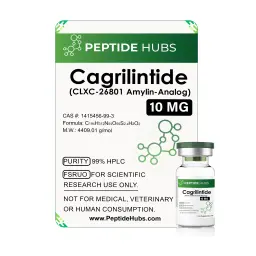
Research Peptide/GLP-1 & Amylin Agonist
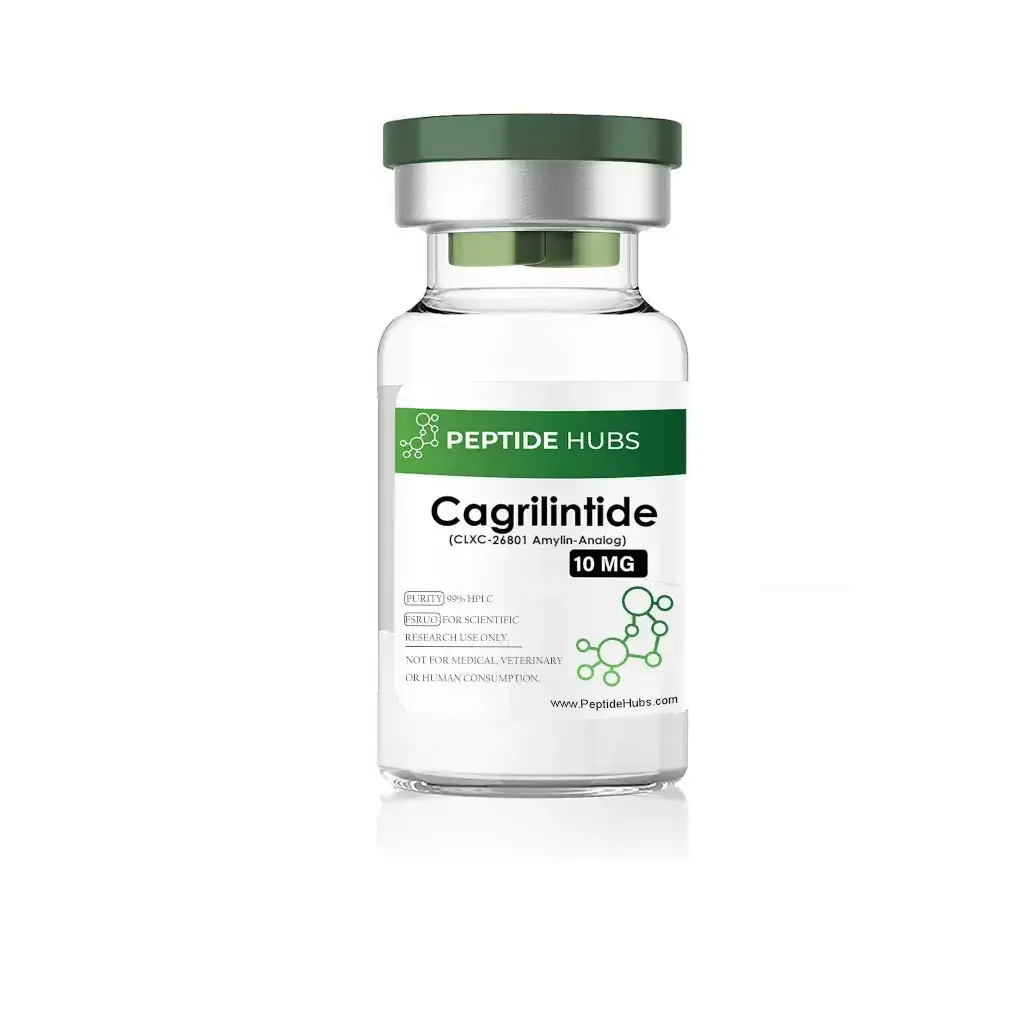
Active Substance: Cagrilintide
Manufacturer: Peptide Hubs
Unit: 2 mL Vial (10 mg/vial)
Form: Lyophilized Powder
Laboratory Tested: View Lab Result
USA Domestic: 2-7 Days Delivery
International: 5-20 Days Delivery
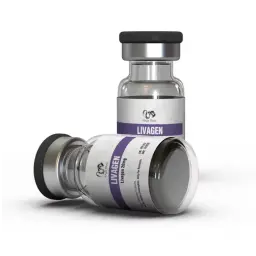
Epigenetic Modulator/Tetrapeptide
Active Substance: Livagen (Lys-Glu-Asp-Ala/KEDA)
Manufacturer: Dragon Pharma
Unit: 2 mL Vial (20 mg/vial)
Form: Lyophilized Powder
USA Domestic: 2-7 Days Delivery
International: 5-20 Days Delivery
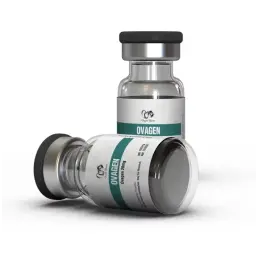
Ovarian Peptide Bioregulator/Cytomedin
Active Substance: Ovagen (Ovarian Peptide Complex)
Manufacturer: Dragon Pharma
Unit: 2 mL Vial (20 mg/vial)
Form: Lyophilized Powder
USA Domestic: 2-7 Days Delivery
International: 5-20 Days Delivery
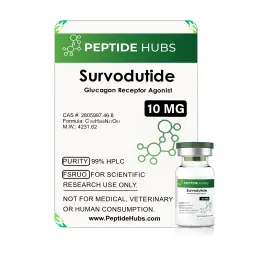
Dual GLP-1/Glucagon Receptor Agonist
Active Substance: Survodutide
Brand: Peptide Hubs
Unit: 2 mL Vial (10 mg/vial)
Form: Lyophilized Powder
Laboratory Tested: View Lab Result
USA Domestic: 2-7 Days Delivery
International: 5-20 Days Delivery
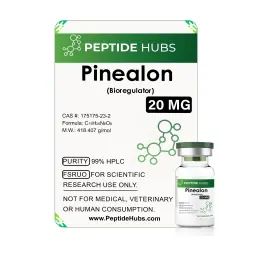
Synthetic Tripeptide
Active Substance: Pinealon (Glu-Asp-Arg)
Brand: Peptide Hubs
Unit: 2 mL Vial (20 mg/vial)
Form: Lyophilized Powder
USA Domestic: 2-7 Days Delivery
International: 5-20 Days Delivery
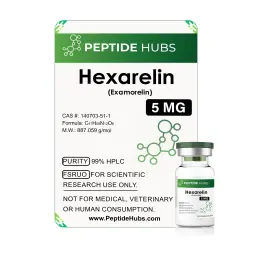
Growth Hormone Releasing Peptide
Active Substance: Examorelin (Hexarelin)
Manufacturer: Peptide Hubs
Unit: 2 mL Vial (5 mg/vial)
Form: Lyophilized Powder
Laboratory Tested: View Lab Result
USA Domestic: 2-7 Days Delivery
International: 5-20 Days Delivery
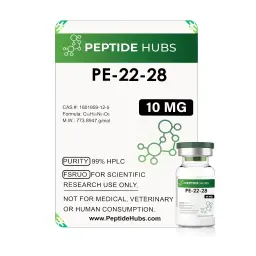
Neuropeptide Research Compound
Active Substance: PE 22-28 (PACAP fragment)
Manufacturer: Peptide Hubs
Unit: 2 mL Vial (10 mg/vial)
Form: Lyophilized Powder
Laboratory Tested: View Lab Result
USA Domestic: 2-7 Days Delivery
International: 5-20 Days Delivery